National Certificate in Automotive Mechanics (NCAM) - St. Peter's VTI Mubende
Welcome to the NCAM Department: Welcome to the National Certificate in Automotive Mechanics programme at St. Peter's Vocational Training Institute Mubende. We are delighted to have you here. Explore our hands-on training in vehicle diagnostics, engine systems, transmission, and modern auto-electronics — designed to prepare you for real-world careers in the automotive industry. Our instructors are ready to guide you every step of the way. Together, let's build skills that shape futures.        Welcome: Welcome to the NCAM Department — where hands-on skills meet automotive excellence. Explore the tabs below to learn more about the programme, the curriculum, and the team behind it.

National Certificate in Automotive Mechanics (NCAM)

Hands-on training in vehicle diagnostics, engine systems, and modern auto-electronics.

📋 Departmental Overview — Automotive Mechanics

🎯 Our Mission

To equip learners with practical, industry-relevant automotive skills through hands-on training, modern diagnostic tools, and a safety-first workshop culture — producing competent mechanics ready for employment, self-employment, and further training.

👁️ Our Vision

To be a centre of excellence in automotive mechanics training in Uganda, recognised for producing skilled, ethical, and innovative technicians who drive the growth of the automotive sector.

🏫 About the Department

The NCAM Department at St. Peter's VTI Mubende offers a comprehensive National Certificate programme in Automotive Mechanics. Our workshop is equipped with engine test benches, diagnostic scanners, transmission rigs, brake service stations, and electrical/electronic training boards.

Learners benefit from a blend of theoretical instruction and extensive practical sessions, with exposure to live vehicles, fault-finding exercises, and real-world repair projects. The programme is aligned with the Uganda TVET curriculum and industry competency standards.
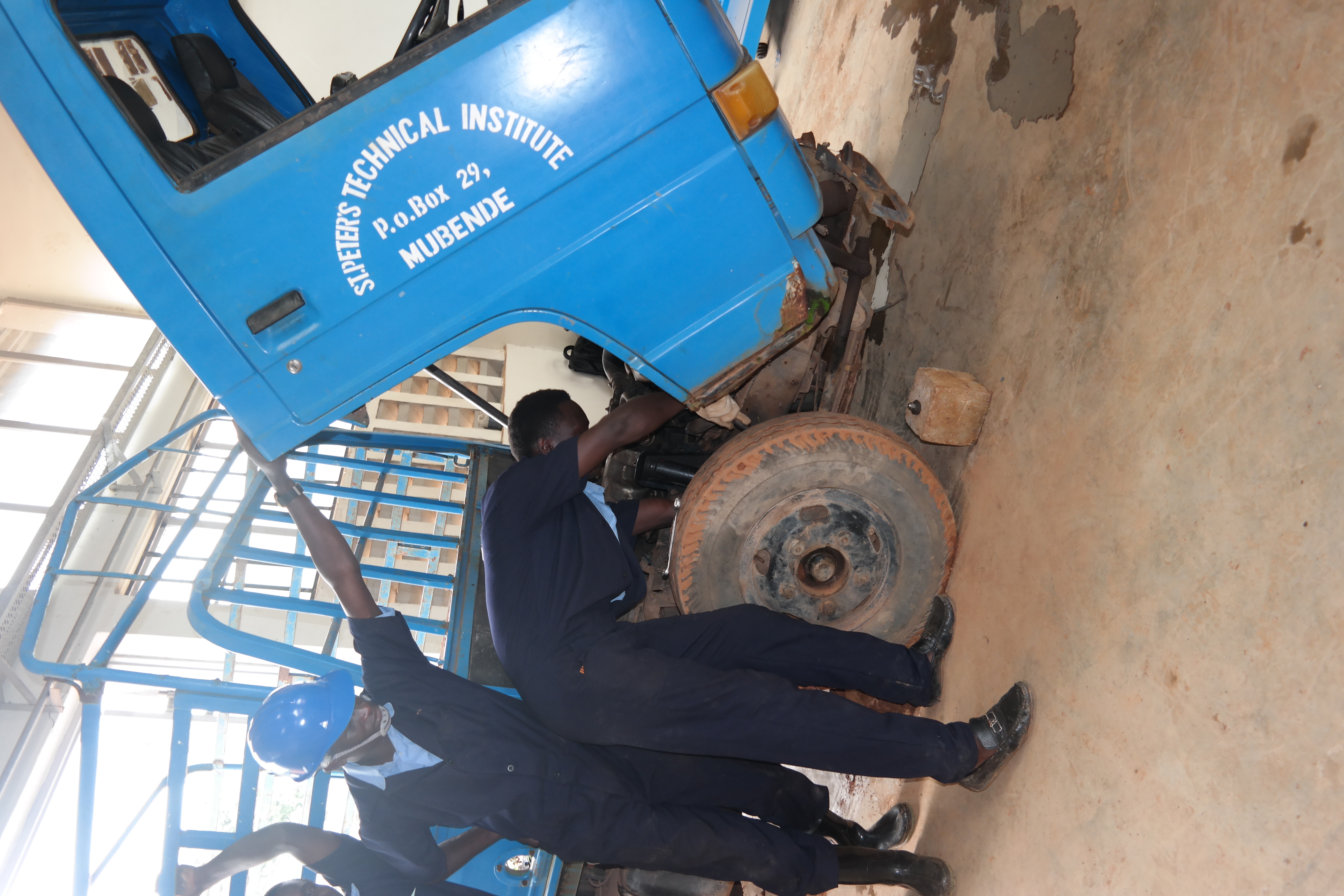
Students working on a blue truck at St. Peter's Technical Institute Mubende
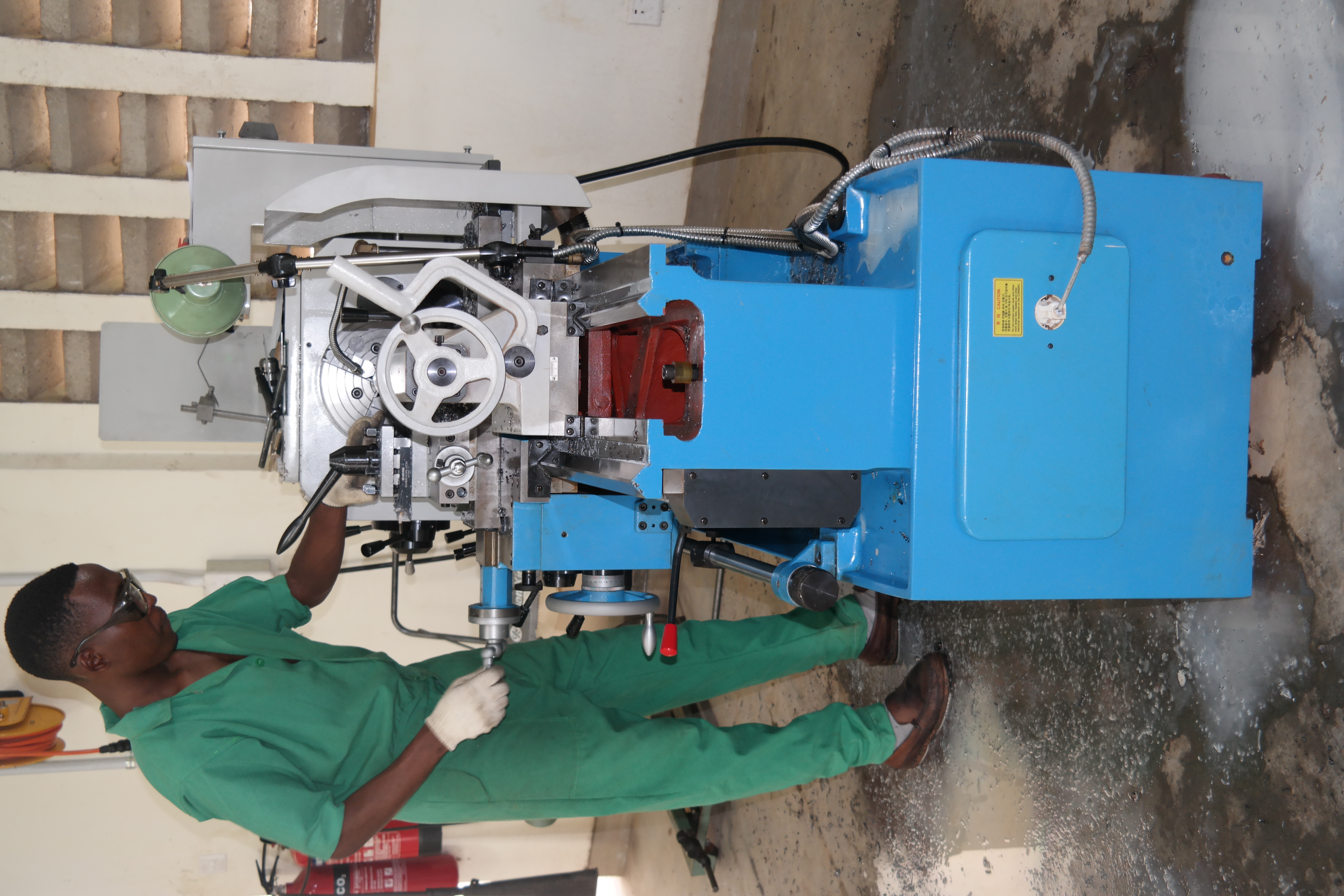
Student operating a lathe machine in green overalls
🔧
Hands-On Training

70% practical, 30% theory — learn by doing in a fully equipped workshop.

🛠️
Modern Equipment

OBD-II scanners, multimeters, compression gauges, and engine test benches.

🎓
Certified Programme

National Certificate accredited by the Uganda TVET system and assessed by UVTAB.

📌 Quick Facts

  • Programme: National Certificate in Automotive Mechanics (NCAM)
  • Duration: 2 Years (6 Terms)
  • Award: National Certificate (TVET)
  • Intake: February
  • Entry Requirements: UCE or equivalent; mature entry with experience
  • Mode: Full-time, Day & Boarding
  • Assessment: Continuous assessment (40%) + Final exams (60%)
  • Assessment Body: Uganda Vocational Training and Assessment Board (UVTAB)
🚀 Career Paths

  • Automotive Mechanic / Technician
  • Vehicle Diagnostic Specialist
  • Workshop Supervisor / Manager
  • Auto-Electronics Technician
  • Self-employed Garage Owner
  • Fleet Maintenance Officer

💡 Why Choose NCAM at St. Peter's VTI Mubende?

  • Experienced instructors with 15+ years of industry and teaching experience
  • Small class sizes for personalised attention
  • Industry attachment / internship opportunities with partner garages
  • Access to live vehicles and real repair jobs during training
  • Strong focus on safety, professionalism, and work ethics
  • Pathway to higher qualifications (Diploma in Automotive Engineering)

📘 Study Notes

Click each section below to expand and view the study notes.

Automotive mechanics is the study of the design, operation, maintenance, and repair of motor vehicles. It covers the internal combustion engine, drivetrain, brakes, suspension, electrical systems, and modern electronic controls.

Common vehicle systems include:

  • Engine: Converts fuel into mechanical energy.
  • Transmission: Transfers power from the engine to the wheels.
  • Braking system: Slows or stops the vehicle safely.
  • Suspension: Absorbs road shocks and keeps the vehicle stable.
  • Electrical system: Powers ignition, lighting, and electronic controls.

Good workshop safety — protective gear, correct tool use, and clean working conditions — prevents injuries and equipment damage.

The internal combustion engine converts fuel into mechanical power through controlled explosions in the cylinders. The four-stroke cycle consists of intake, compression, power, and exhaust strokes.

Engine diagnostics uses:

  • OBD-II scanners to read fault codes.
  • Multimeters to test electrical circuits.
  • Compression gauges to assess cylinder health.
  • Vacuum gauges to detect intake leaks.

Regular maintenance — oil changes, coolant checks, and spark plug replacement — extends engine life and prevents costly breakdowns.

No study materials uploaded yet.

🧑‍🏫 Meet the Instructors

Meet the instructors and technical staff of the Automotive Mechanics department.

JM
Mr. James Mukasa
Head of Department

Specialty: Engine Diagnostics & Overhaul

Experience: 15 years

Email: j.mukasa@stpetersvti.ac.ug

SN
Ms. Sarah Nakato
Senior Instructor

Specialty: Auto-Electronics & ECU Systems

Experience: 10 years

Email: s.nakato@stpetersvti.ac.ug

PO
Mr. Peter Ochieng
Workshop Technician

Specialty: Transmission & Drivetrain

Experience: 8 years

Email: p.ochieng@stpetersvti.ac.ug

GK
Mr. Godfrey Kizza
Instructor

Specialty: Brake Systems & Suspension

Experience: 7 years

Email: g.kizza@stpetersvti.ac.ug

AN
Ms. Alice Nabirye
Instructor

Specialty: Vehicle Electrical Wiring

Experience: 6 years

Email: a.nabirye@stpetersvti.ac.ug

RS
Mr. Robert Ssemakula
Lab Assistant

Specialty: Tools & Equipment Maintenance

Experience: 4 years

Email: r.ssemakula@stpetersmubende.ac.ug