National Certificate in Building Construction (NCBC) - St. Peter's VTI Mubende
Welcome to the NCBC Department: Welcome to the National Certificate in Building Construction programme at St. Peter's Vocational Training Institute Mubende. We are delighted to have you here. Explore our hands-on training in structural masonry, concrete technology, blueprint reading, and site management — designed to prepare you for real-world careers in the construction industry. Our instructors are ready to guide you every step of the way. Together, let's build skills that shape futures.        Welcome: Welcome to the NCBC Department — where hands-on skills meet construction excellence. Explore the tabs below to learn more about the programme, the curriculum, and the team behind it.

National Certificate in Building Construction (NCBC)

Structural masonry, concrete technology, site management, and hands-on construction skills.

📋 Departmental Overview — Building Construction

🎯 Our Mission

To equip learners with practical, industry-relevant construction skills through hands-on training, modern site practices, and a safety-first culture — producing competent builders ready for employment, self-employment, and further training.

👁️ Our Vision

To be a centre of excellence in building construction training in Uganda, recognised for producing skilled, ethical, and innovative technicians who drive the growth of the construction sector.

🏫 About the Department

The NCBC Department at St. Peter's VTI Mubende offers a comprehensive National Certificate programme in Building Construction. Our training facilities include practical site workshops, masonry stations, concrete mixing areas, and structural testing equipment.

Learners benefit from a blend of theoretical instruction and extensive practical sessions, with exposure to live construction projects, blueprint interpretation, and real-world site management. The programme is aligned with the Uganda TVET curriculum and industry competency standards.
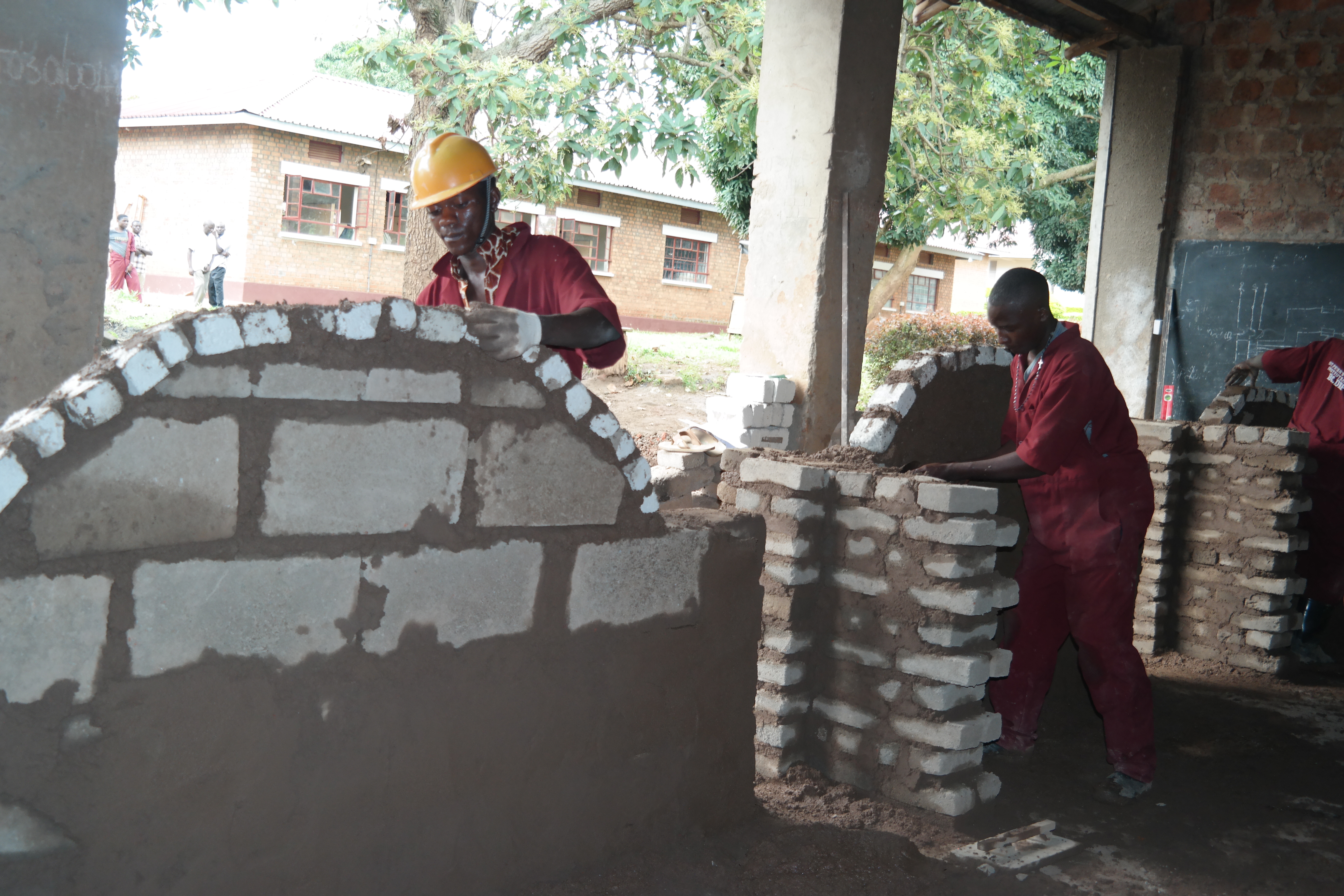
Students constructing a brick arch at St. Peter's Technical Institute Mubende
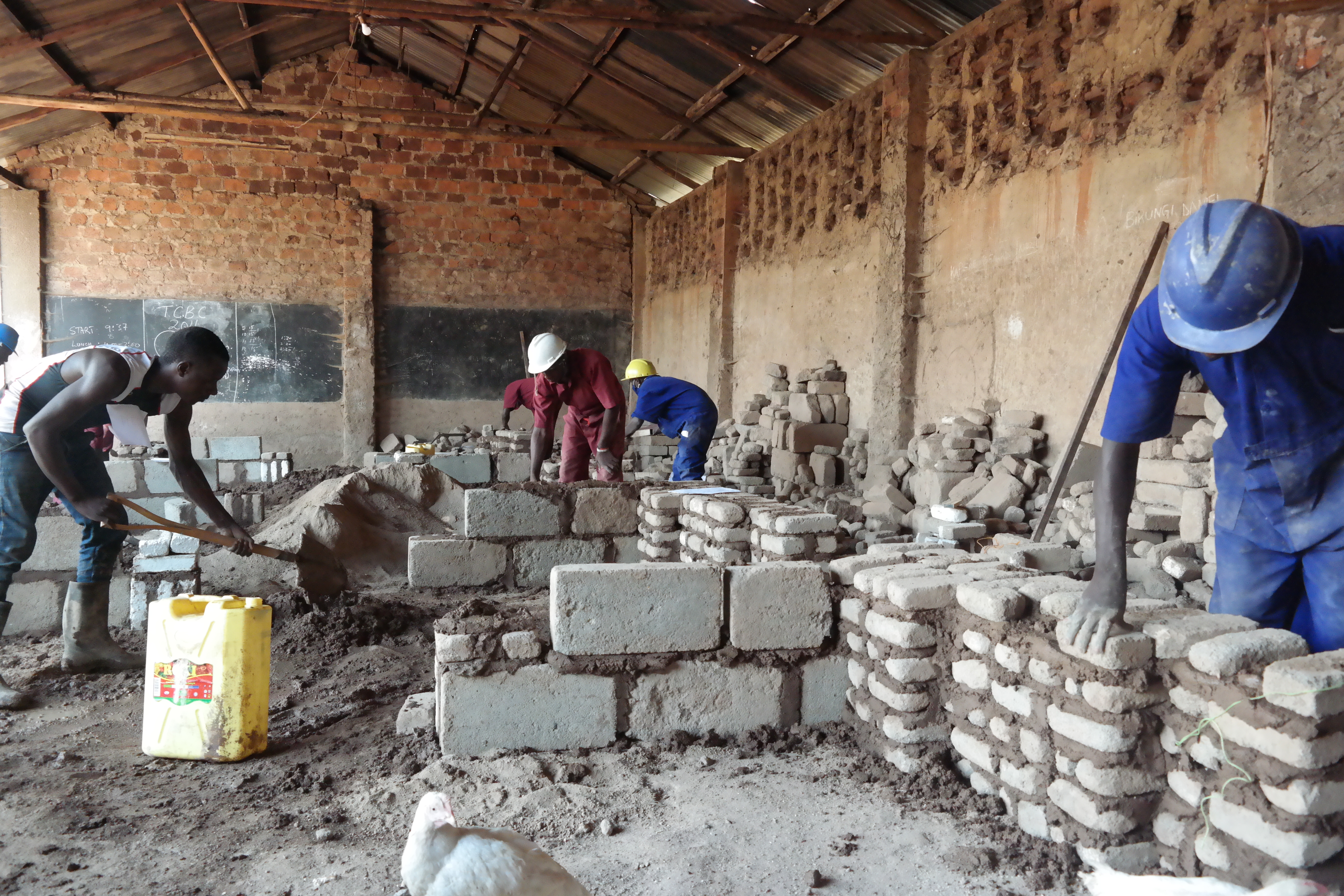
Students mixing mortar and laying blocks on the construction site
🧱
Hands-On Training

Practical site experience — learn by doing in a fully equipped construction workshop.

📐
Modern Techniques

Blueprint reading, concrete testing, and structural reinforcement skills.

🎓
Certified Programme

National Certificate accredited by the Uganda TVET system and assessed by UVTAB.

📌 Quick Facts

  • Programme: National Certificate in Building Construction (NCBC)
  • Duration: 2 Years (6 Terms)
  • Award: National Certificate (TVET)
  • Intake: February
  • Entry Requirements: UCE or equivalent; mature entry with experience
  • Mode: Full-time, Day & Boarding
  • Assessment: Continuous assessment (40%) + Final exams (60%)
  • Assessment Body: Uganda Vocational Training and Assessment Board (UVTAB)
🚀 Career Paths

  • Building Construction Technician
  • Site Supervisor / Manager
  • Masonry Specialist
  • Concrete Technologist
  • Self-employed Contractor
  • Quantity Surveying Assistant

💡 Why Choose NCBC at St. Peter's VTI Mubende?

  • Experienced instructors with 18+ years of industry and teaching experience
  • Small class sizes for personalised attention
  • Industry attachment / internship opportunities with partner construction firms
  • Access to live construction projects and real site work during training
  • Strong focus on safety, professionalism, and work ethics
  • Pathway to higher qualifications (Diploma in Civil Engineering)

📘 Study Notes

Click each section below to expand and view the study notes.

Building construction is the process of assembling and erecting structures such as houses, schools, hospitals, and commercial buildings. It involves several stages: planning, design, site preparation, foundation laying, structural works, finishing, and handover.

Key construction materials include:

  • Cement: Binds aggregates into concrete and mortar.
  • Sand and aggregates: Provide bulk and strength in concrete.
  • Steel: Reinforcement bars resist tensile forces.
  • Timber: Used for formwork, roofing, and joinery.
  • Bricks and blocks: Used for wall construction.

Good site safety — protective gear, correct tool use, and a clean working environment — prevents injuries and keeps the site productive.

Concrete is a mixture of cement, sand, aggregates, and water. Its strength depends on the correct mix ratio, adequate compaction, and proper curing.

Common concrete mix ratios include:

  • 1:3:6 — mass concrete for foundations
  • 1:2:4 — reinforced concrete for beams and columns
  • 1:1.5:3 — high-strength concrete for critical elements

Proper curing (keeping the concrete moist for 7–14 days) is essential for reaching full strength. Reinforcement bars should be fixed with correct spacing and cover to protect against corrosion.

No study materials uploaded yet.

🧑‍🏫 Meet the Instructors

Meet the instructors and technical staff of the Building Construction department.

MK
Mr. Michael Katende
Head of Department

Specialty: Structural Construction & Site Management

Experience: 18 years

Email: m.katende@stpetersvti.ac.ug

BN
Ms. Betty Nansubuga
Senior Instructor

Specialty: Concrete Technology & Reinforcement

Experience: 12 years

Email: b.nansubuga@stpetersvti.ac.ug

JM
Mr. Joseph Mugisha
Workshop Technician

Specialty: Masonry & Finishing Works

Experience: 9 years

Email: j.mugisha@stpetersvti.ac.ug

RK
Mr. Robert Kaggwa
Instructor

Specialty: Construction Drawing & Estimation

Experience: 8 years

Email: r.kaggwa@stpetersvti.ac.ug

AN
Ms. Agnes Namutebi
Instructor

Specialty: Roofing & Finishing

Experience: 6 years

Email: a.namutebi@stpetersvti.ac.ug

SK
Mr. Samuel Kigozi
Lab Assistant

Specialty: Tools & Materials Handling

Experience: 4 years

Email: s.kigozi@stpetersmubende.ac.ug