National Certificate in Electrical Systems (NCES) - St. Peter's VTI Mubende
Welcome to the NCES Department: Welcome to the National Certificate in Electrical Systems programme at St. Peter's Vocational Training Institute Mubende. We are delighted to have you here. Explore our hands-on training in domestic and industrial electrical installation, power system maintenance, wiring, and renewable energy technologies — designed to prepare you for real-world careers in the electrical industry. Our instructors are ready to guide you every step of the way. Together, let's build skills that shape futures.        Welcome: Welcome to the NCES Department — where hands-on skills meet electrical excellence. Explore the tabs below to learn more about the programme, the curriculum, and the team behind it.

National Certificate in Electrical Systems (NCES)

Domestic & industrial installation, power systems, and renewable energy technologies.

📋 Departmental Overview — Electrical Systems

🎯 Our Mission

To equip learners with practical, industry-relevant electrical skills through hands-on training, modern diagnostic tools, and a safety-first workshop culture — producing competent electricians ready for employment, self-employment, and further training.

👁️ Our Vision

To be a centre of excellence in electrical systems training in Uganda, recognised for producing skilled, ethical, and innovative technicians who drive the growth of the energy and electrical sectors.

🏫 About the Department

The NCES Department at St. Peter's VTI Mubende offers a comprehensive National Certificate programme in Electrical Systems. Our workshops are equipped with wiring boards, motor control rigs, solar PV training kits, and modern testing instruments.

Learners benefit from a blend of theoretical instruction and extensive practical sessions, with exposure to live installations, fault-finding exercises, and real-world electrical projects. The programme is aligned with the Uganda TVET curriculum and industry competency standards.
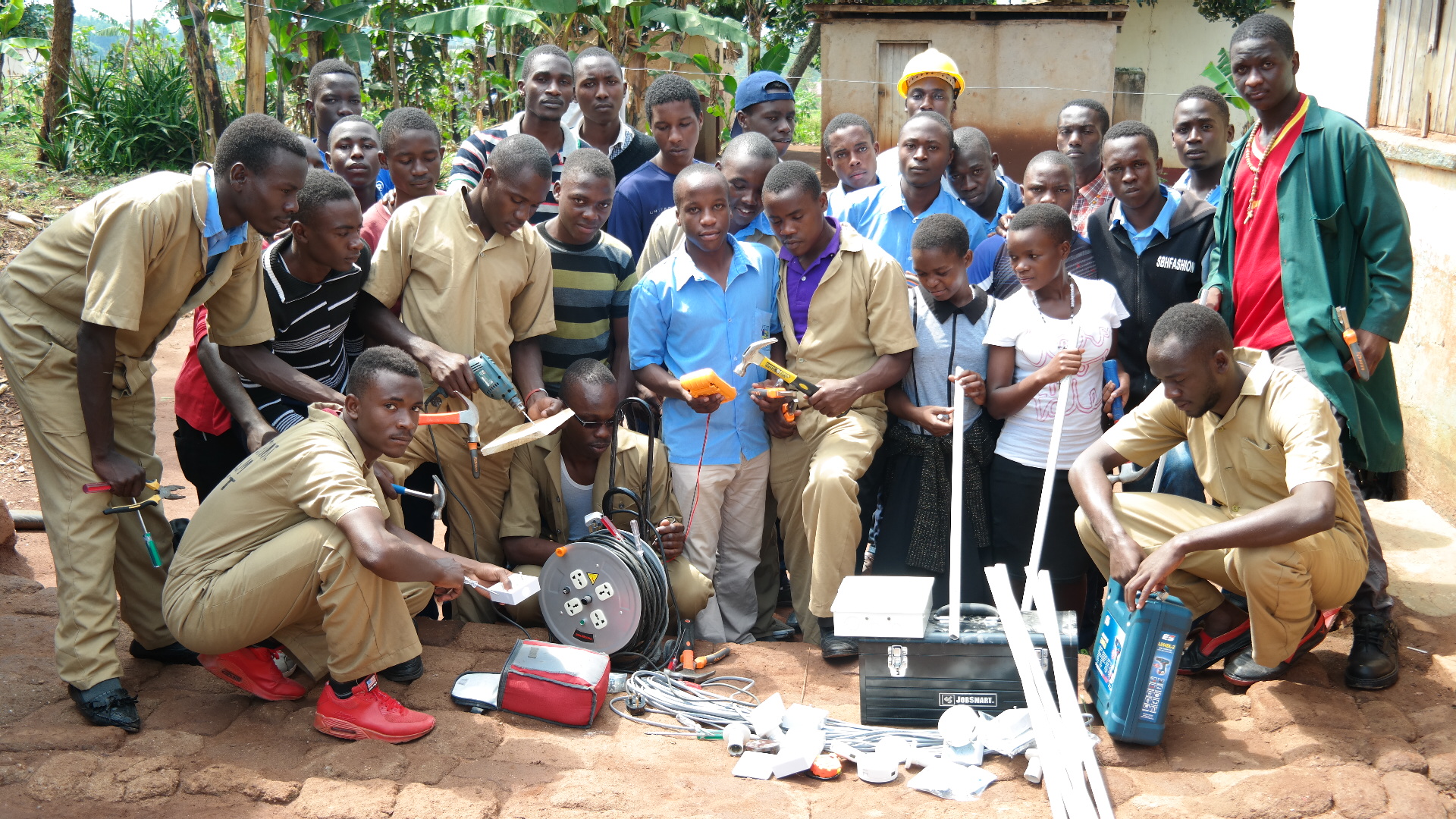
Electrical students with tools and equipment at St. Peter's VTI Mubende
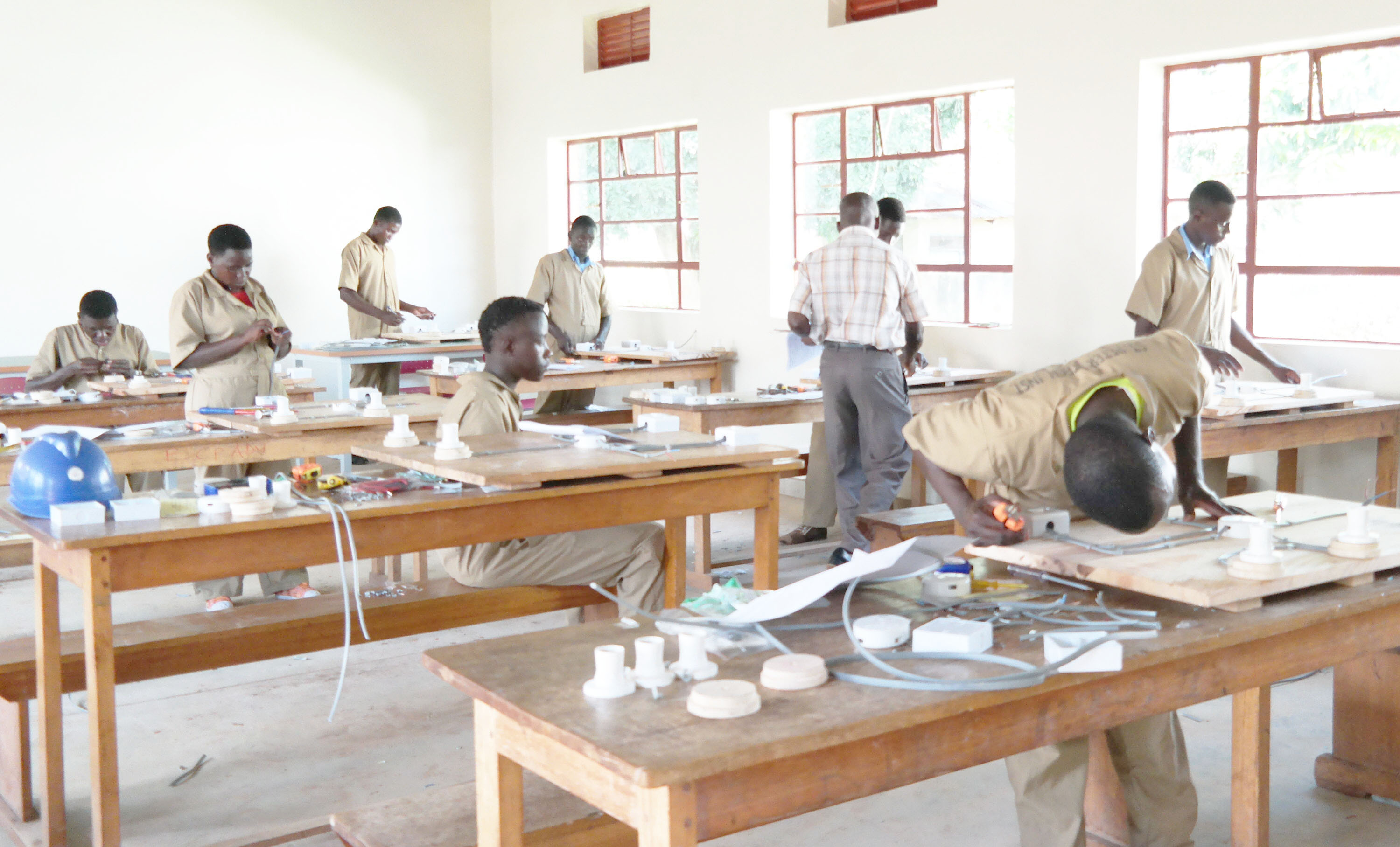
Students practicing wiring in the electrical workshop
⚡
Hands-On Training

Practical wiring experience — learn by doing in a fully equipped electrical workshop.

🔌
Modern Equipment

Multimeters, insulation testers, motor control rigs, and solar training kits.

🎓
Certified Programme

National Certificate accredited by the Uganda TVET system and assessed by UVTAB.

📌 Quick Facts

  • Programme: National Certificate in Electrical Systems (NCES)
  • Duration: 2 Years (6 Terms)
  • Award: National Certificate (TVET)
  • Intake: February
  • Entry Requirements: UCE or equivalent; mature entry with experience
  • Mode: Full-time, Day & Boarding
  • Assessment: Continuous assessment (40%) + Final exams (60%)
  • Assessment Body: Uganda Vocational Training and Assessment Board (UVTAB)
🚀 Career Paths

  • Electrical Installation Technician
  • Industrial Electrician
  • Solar PV Installer / Technician
  • Electrical Maintenance Officer
  • Self-employed Electrical Contractor
  • Electrical Estimator / Supervisor

💡 Why Choose NCES at St. Peter's VTI Mubende?

  • Experienced instructors with 16+ years of industry and teaching experience
  • Small class sizes for personalised attention
  • Industry attachment / internship opportunities with partner electrical firms
  • Access to live installation projects and real troubleshooting exercises
  • Strong focus on safety, professionalism, and work ethics
  • Pathway to higher qualifications (Diploma in Electrical Engineering)

📘 Study Notes

Click each section below to expand and view the study notes.

Electricity is the flow of electric charge through a conductor. The three fundamental electrical quantities are:

  • Voltage (V): The electrical pressure that pushes current through a circuit. Measured in volts.
  • Current (I): The rate of flow of electric charge. Measured in amperes.
  • Resistance (R): Opposition to current flow. Measured in ohms.

These quantities are related by Ohm's Law: V = I × R. Understanding this relationship is essential for calculating circuit values and diagnosing faults.

Electrical power is calculated as P = V × I, measured in watts.

Electrical safety is critical in every installation. Always:

  • Wear insulated gloves and protective gear when working on live circuits.
  • Isolate the power supply before working on any circuit.
  • Use tools with insulated handles.
  • Ensure proper earthing of all metal enclosures and appliances.

Earthing (grounding) provides a safe path for fault current to return to the ground, preventing electric shock and fire hazards. It is required by electrical standards worldwide and is inspected during every installation test.

No study materials uploaded yet.

🧑‍🏫 Meet the Instructors

Meet the instructors and technical staff of the Electrical Systems department.

EM
Mr. Emmanuel Musoke
Head of Department

Specialty: Industrial Installation & Power Systems

Experience: 16 years

Email: e.musoke@stpetersvti.ac.ug

JN
Ms. Juliet Nakamya
Senior Instructor

Specialty: Domestic Wiring & Inspection

Experience: 11 years

Email: j.nakamya@stpetersvti.ac.ug

DO
Mr. Daniel Ochieng
Workshop Technician

Specialty: Motors & Control Circuits

Experience: 9 years

Email: d.ochieng@stpetersvti.ac.ug

FK
Mr. Fred Kato
Instructor

Specialty: Solar PV & Renewable Energy

Experience: 7 years

Email: f.kato@stpetersvti.ac.ug

RN
Ms. Rebecca Nassiwa
Instructor

Specialty: Electrical Drawing & Estimation

Experience: 5 years

Email: r.nassiwa@stpetersvti.ac.ug

BS
Mr. Brian Ssekandi
Lab Assistant

Specialty: Tools & Equipment Maintenance

Experience: 4 years

Email: b.ssekandi@stpetersmubende.ac.ug